






Best Electric Skateboard for Commuting (2025 Guide)

Best Electric Skateboard for Commuting (2025 Guide) - Exway Electric Skateboard


For many riders,commuting is no longer just about getting from point A to point B. In 2025,an electric skateboard for commuting has become a practical,flexible,and genuinely enjoyable way to move through the city.

But here’s the truth:not every electric skateboard that looks good on paper actually works for daily commuting.

After enough real-world rides—waiting at traffic lights, carrying a board into elevators, dealing with cracked pavement—it becomes clear that commuting has very different demands than weekend cruising.

This guide focuses on what actually matters for everyday commuting, not just advertised specs.

Why More Riders Are Commuting on Electric Skateboards

Compared to bikes or electric scooters, electric skateboards offer a unique mix of convenience and freedom:

  • Compact & portable – easy to bring into offices, classrooms, and apartments
  • Time-efficient – avoid traffic and parking completely
  • Low running cost – no fuel, minimal maintenance
  • Flexible – ride, carry, or combine with public transport

For short-to-mid-range urban commutes (roughly 2–10 miles), electric skateboards often fit real life better than larger personal vehicles.


What Makes a Good Electric Skateboard for Commuting?

Specs matter—but daily commuting is less about peak numbers and more about how a board behaves in messy, unpredictable city conditions.

After countless short rides involving stoplights, curbs, stairs, and uneven roads, a few factors consistently make commuting easier.

1. Range You Can Actually Rely On

Real commuting rarely means riding one long, uninterrupted route.
Boards get turned on and off, left standing during meetings, or used in short bursts throughout the day.

Because of this, real-world range often feels very different from advertised maximums.

A good rule of thumb is choosing a board that offers 30–40% more range than your daily route. That buffer removes range anxiety and reduces long-term battery stress.

Practical commuter benchmarks:

  • Short commute (2–4 miles): 10–12 miles of real range
  • Medium commute (5–8 miles): 15–20 miles
  • Long commute (8–12 miles): 20+ miles


2. Portability & Weight (This Matters More Than You Think)

Most riders underestimate how often they’ll carry their board—until they start commuting daily.

Subway stairs, office elevators, apartment hallways—these moments add up fast.

From real commuting experience,15-18kg(33-40lbs) is where boards start to feel noticeably heavy for everyday carrying.Balance and how the deck feels in your hand often matter as much as the number on the scale.

A board that rides well but feels awkward to carry can become frustrating surprisingly quickly.


3. Stability & Ride Comfort on Imperfect Roads

City pavement is rarely smooth. A commuter board should stay composed over:

  • Cracked asphalt
  • Road seams
  • Brick paths
  • Slight potholes

What actually helps:

  • A slightly flexible deck (bamboo or composite)
  • Larger wheels (90–100mm or more)
  • Stable trucks paired with a well-tuned ESC


Comfort isn’t just about softness—it’s about how calm the board feels when the road isn’t perfect.


4. Braking & Safety in Real Traffic

In daily commuting, top speed is rarely the limiting factor—braking control is.

Smooth, predictable braking at traffic lights and crosswalks reduces fatigue and builds confidence. Abrupt braking, even if powerful, can feel unsettling in crowded bike lanes or mixed traffic.

Look for:

  • Refined ESC tuning
  • Progressive regenerative braking
  • Visibility solutions like front and rear lights

Calm braking makes a long-term difference in how relaxed commuting feels.


5. Power for Slopes, Ramps, and Bridges

Even flat cities hide small challenges: parking ramps, overpasses, long inclines.

For commuting, dual-motor setups are strongly recommended—especially for riders over 75 kg (165 lbs). Extra torque isn’t about speed; it’s about consistency and control when conditions change.


Belt Drive vs Hub Motor for Commuting: Core Comparison Table

Belt Drive vs Hub Motor for Commuting

Comparison Dimension Hub Motor Belt Drive
Operation Noise Quieter operation Slightly louder
Maintenance Requirement Lower maintenance Occasional belt maintenance
Appearance Cleaner look Exposed transmission structure
Ride Comfort Less comfort (motors sit inside the wheels) Smoother ride with better vibration absorption
Hill-climbing Torque Reduced torque on hills Better hill climbing with strong torque
Braking Feel Average braking feedback Smoother braking feel
Wheel Compatibility Limited wheel options More wheel options for comfort
Ideal Commuting Scenarios Flat urban roads, short-distance commutes Varied urban terrain (steep slopes, bumpy roads), medium-to-long-distance commutes


Best Electric Skateboards for Commuting in 2025

Based on daily usability—not just specs—these boards stand out for commuting.

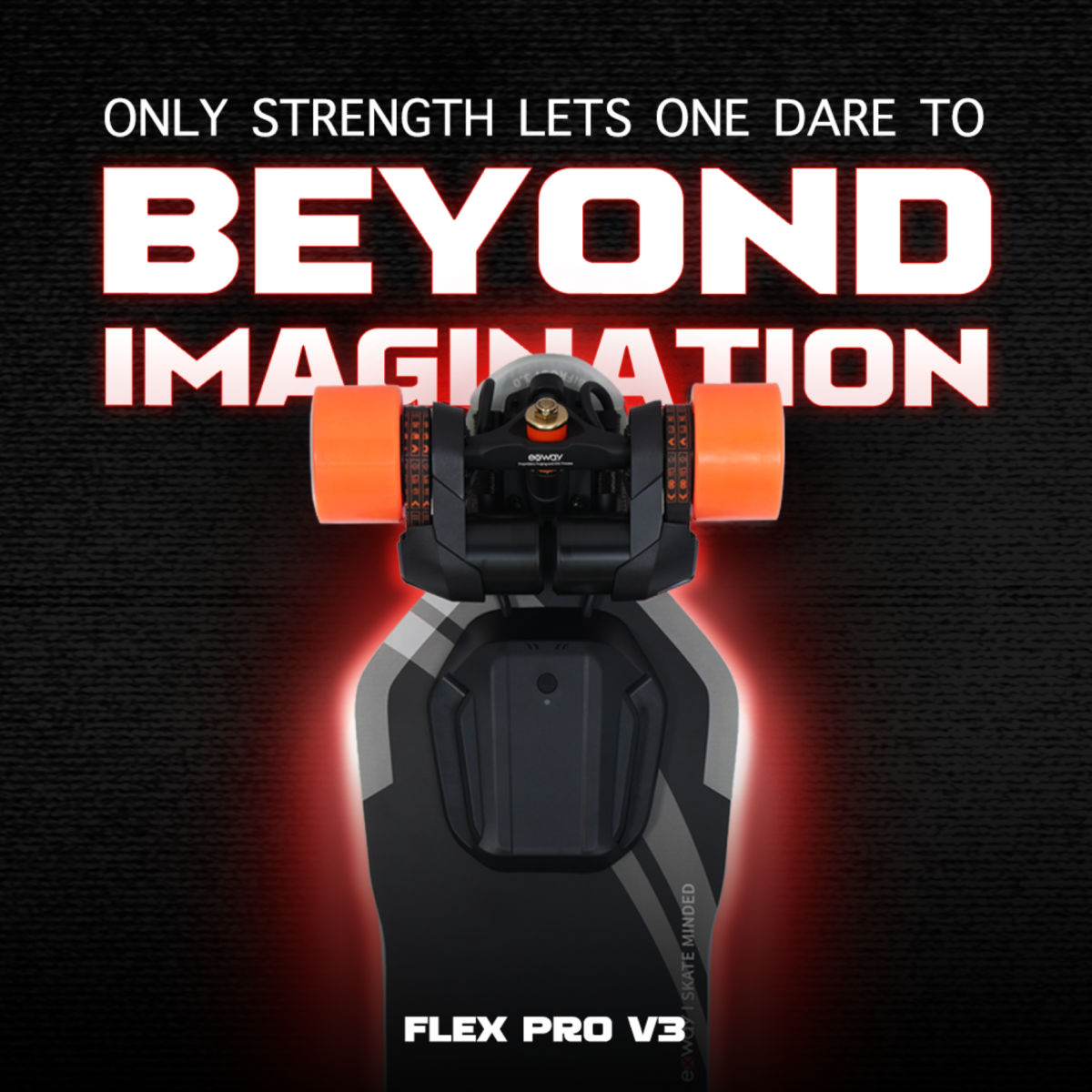
Exway Flex Pro V3– Best Overall for Daily Commuting

The Exway Flex Pro V3 hits a rare balance: powerful enough for city riding, yet comfortable and manageable for everyday use.

Why it works for commuting:

  • Strong dual belt motors for stop-and-go traffic
  • Flexible deck that absorbs road vibration
  • Smooth, confidence-inspiring braking

It feels calm and predictable—qualities that matter more than raw speed during a weekday ride.

Best for:
Daily commuters who want comfort, control, and reliability.


Exway Flex – Best Value Commuter Electric Skateboard

The standard Exway Flex focuses on practicality.

Highlights:

  • Lighter and easier to carry
  • Stable, forgiving ride
  • Reliable range for short-to-medium commutes

It may not chase extreme performance, but it delivers exactly what many commuters need: consistency.

Best for:
Beginners, students, and budget-conscious riders.


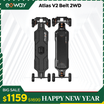
Exway Atlas Series – For Longer or Rougher Commutes

If your commute includes rough pavement or longer distances, the Exway Atlas lineup offers exceptional stability.

Why consider it:

  • Larger wheels for poor road conditions
  • Excellent high-speed composure
  • Strong braking, even on descents

The trade-off is weight—but for challenging routes, the added confidence can be worth it.


Electric Skateboard vs Electric Scooter for Commuting

Both have their place.

Electric skateboard advantages:

  • Easier to carry and store
  • More flexible with public transport
  • More engaging ride feel

Electric scooter advantages:

  • Easier learning curve
  • Larger wheels for very rough roads

For mixed ride-and-carry commutes, electric skateboards often offer more flexibility.


Is Commuting on an Electric Skateboard Safe?

Yes—when done responsibly.

Basic commuter habits matter more than speed:

  • Wear a helmet
  • Use lights, even during the day
  • Ride predictably
  • Start in lower speed modes

A stable board with smooth braking reduces risk far more than raw power ever could.


Final Verdict: The Best Electric Skateboard for Commuting

The best commuter electric skateboard isn’t the fastest or most aggressive.
It’s the one that feels predictable at traffic lights, stable on imperfect pavement, and manageable when carried into buildings.

Boards like the Exway Flex Pro V3 stand out in 2025 because they prioritize real-world usability over extreme specs.

Before choosing, think honestly about:

  • How often you stop and start
  • How frequently you carry the board
  • The condition of your daily route

When a board fits naturally into your routine, commuting stops feeling like transportation—and starts feeling effortless.


Rider’s note:
No commuter setup is perfect. Heavier boards feel calmer at speed, while lighter boards are easier to carry. The right board is the one you won’t hesitate to ride every single day.


Ανάγνωση επόμενου

Essential Post-Mud and Water Ride Maintenance for Electric Skateboard Riders - Exway Electric Skateboard